
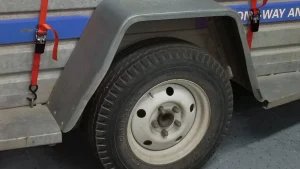
Trailer tires are often viewed as simple wear-and-replace components. But uneven tire wear is rarely just a tire issue. It is usually a warning sign of deeper mechanical problems that, if ignored, can lead to blowouts, suspension damage, and costly roadside breakdowns.
Recognizing the patterns of uneven wear early can save money and prevent dangerous situations on the road.
Why Trailer Tire Wear Matters
Unlike passenger vehicles, trailers do not steer or power themselves. They rely entirely on proper alignment, suspension, and axle positioning to track correctly behind the tow vehicle. When something is even slightly off, the tires take the punishment.
Because trailers often carry heavy loads, small alignment or suspension issues can quickly translate into rapid and uneven tread wear.
Common Uneven Wear Patterns and What They Mean
Inside or outside edge wear often points to axle misalignment or bent axles. When the axle is not perfectly square, the tire drags slightly instead of rolling smoothly, wearing down one side faster.
Cupping or scalloped tread patterns usually indicate worn suspension components or unbalanced tires. This uneven contact with the road can cause vibration and reduced handling stability.
Center tread wear may signal overinflation, while excessive wear on both outer edges often suggests underinflation. Improper tire pressure not only shortens tire life but also increases the risk of blowouts.
One tire wearing faster than the others may indicate a failing bearing, damaged hub, or brake drag issue.
The Cost of Ignoring the Warning Signs
Many operators replace worn tires without investigating the root cause. While new tires may temporarily improve performance, the underlying problem remains. This leads to repeated tire replacements, increasing maintenance costs over time.
More importantly, uneven wear weakens the tire structure. A worn or stressed tire is far more likely to fail at highway speeds, potentially causing loss of control or cargo damage.
In commercial operations, tire failures can also delay deliveries and disrupt schedules.
How Alignment and Suspension Play a Role
Trailer axles must be properly aligned and mounted to ensure even weight distribution. Bent axles, damaged leaf springs, worn bushings, and misaligned hangers can all shift the trailer’s tracking pattern.
Heavy impacts from potholes, curbs, or overloaded hauling can cause structural changes that are not immediately visible but affect tire performance.
Routine inspections of axles, suspension components, and bearings help detect these issues before tire damage becomes severe.
Protecting Your Investment
Tires are one of the most expensive recurring maintenance items for trailer owners. Protecting them requires more than checking air pressure. Regular alignment checks, suspension inspections, and prompt repairs of worn components extend tire life and improve overall safety.
Rotating tires when appropriate and maintaining proper load balance also reduces uneven wear.
Uneven tire wear is never random. It is your trailer’s way of signaling that something is wrong. Addressing the underlying mechanical issue instead of simply replacing tires protects your equipment, your cargo, and your bottom line.
Pay attention to your tires. They often tell the story before a serious problem develops.